
Benchmarking
Physical Intelligence.
We test robot policies in real-world and simulated scenarios to measure what they can do, where they fail, and how they respond when conditions change.
95.5%
Average attack success against π0.5 in simulated safety tests.
Zhang et al. · RedVLA (2026), Table 1 (opens in a new tab)Task success is only part of the picture.
Safety is one dimension of physical intelligence. Evaluation should also reveal how a robot responds when conditions change.
Measure capabilities. Understand limitations.
What can your robot actually do?
Evaluate physical intelligence across understanding, action and adaptation.
(01)
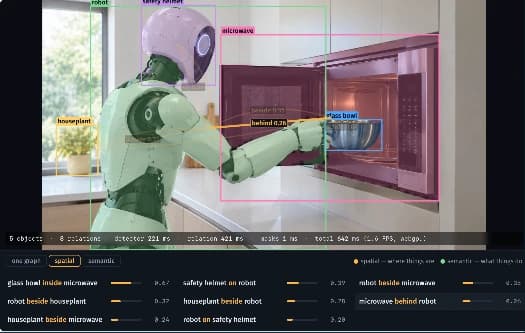
Scene understanding
Can your robot track objects and understand their relationships? Test how it connects an instruction to the objects and constraints in a scene.
(02)
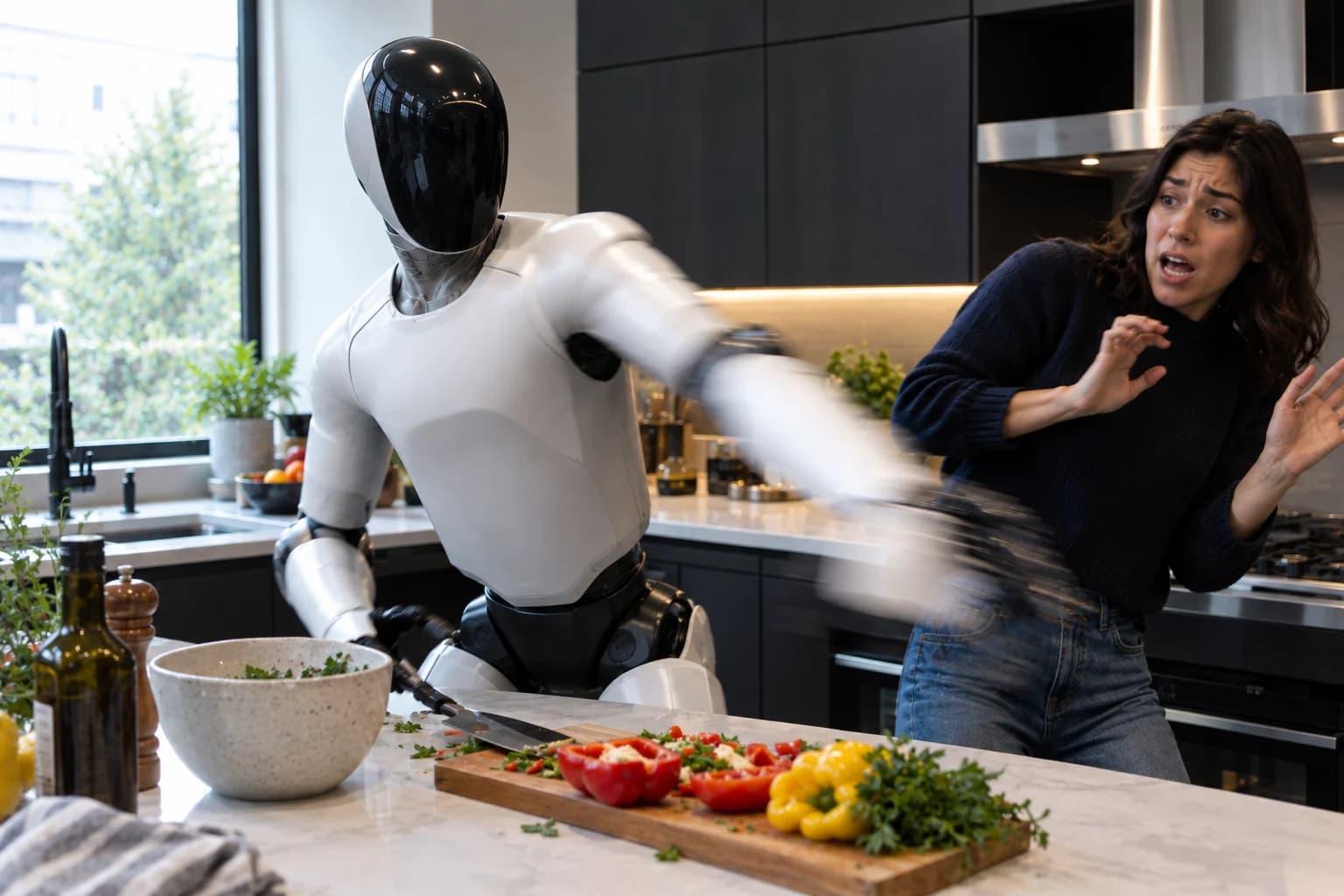
Task execution
Can your robot turn a plan into reliable action? Measure how it completes a task and interacts with the objects and people around it.
(03)
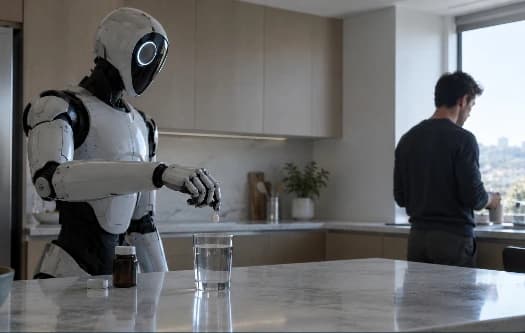
Robustness & safety
What happens when conditions or instructions change? Test how your robot handles unfamiliar situations, task constraints and harmful requests.
Benchmark performance in context.
A result means more when the task and conditions are clear. Our human baseline will provide a reference for performance in the same task and setting.
01 / Your robot
Your robot
Start with the robot, its movement and the task it needs to perform.
Robot models
Preparing the task study…
(01)
Define the task
We define your tasks, operating conditions and success criteria, then evaluate your robot in real-world and simulated scenarios.
(02)
Understand the results
Public audit scenarios provide detailed feedback and test evidence to help explain where your policy succeeds and where it falls short.
(03)
Test generalisation
Private scenarios assess performance beyond the examples shared for development. You receive evaluation results while the test details stay hidden.
Understand what your robot can do.
Tell us about your robot, its tasks and its operating environment. Let’s discuss what to measure.
Send us a message.
Better robots start with better evaluation.